
Australia is home to many of the world’s most idiosyncratic things – many of which occupy a rather broad spectrum in terms of normalcy. The Great Barrier Reef – the largest coral reef in the world! Giant spiders, spider nets over a landscape that give the illusion that snowfall has taken place – and tarantulas large enough to make you reconsider why you even came here in the first place – leading to frequent jokes about the Aussies and their country itself. However, one of the most often forgotten things about Australia was its relatively modern war with emus – dubbed the fitting “The Great Emu War of 1932” – which it famously lost. Against emus. Birds. Which cannot fly. (Jesus Christ).
So how did this unfold in the first place? Due to a combination of some things, and really bad timing: First, the Drought that plagued Australia, Due to the El Niño–Southern Oscillation (ENSO) positive phase, which is a meteorological phenomenon, a drought occurred in Australia that drained the inland regions of food and water and pushed the emus inward in search of the same for their breeding season.
Second, The Great Depression, Many farmers – a large chunk of whom were veterans who had fought in World War I – were already struggling due to the economy and the prices of wheat and other crops. So, farmers struggling and growing crops just to put food on the table, and emus migrating inward toward the farmlands that just happened to be the perfect environment they were looking for in their breeding season. It was a recipe for disaster. Now, of course, the emus – analogous to pests in this context – began consuming the grain and crops for themselves, and the farmers could do little to nothing due to the emus’ anatomy and biological features.
The crops and their financial situation were already hanging by a thread – so they appealed to the government and thus began the infamous war – where the Australian military fought emus.
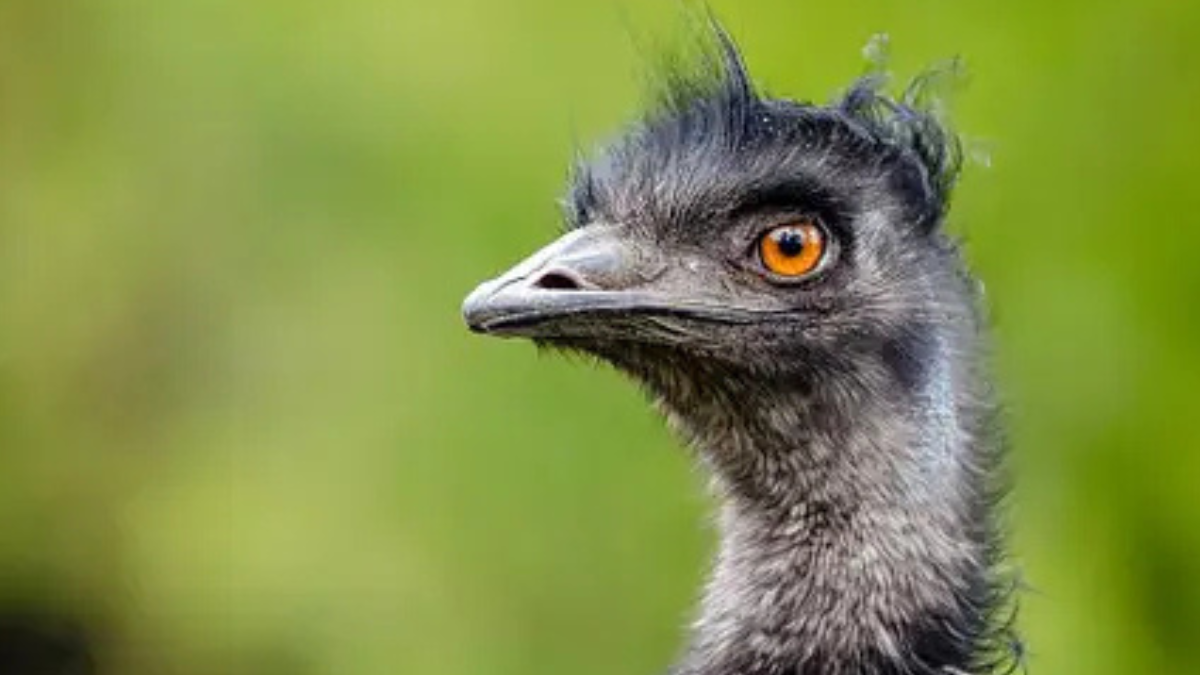
Now, let’s reflect on this for a moment – we are talking about an actual military (not the whole military but rather a small regiment – but still actual military) – the military which, if needed, could fight in a war against other countries – and a rather strong one to be exact – fighting against flightless birds. What could possibly go wrong? Emus are not normal birds – they are flightless, yes. But they are also (with respect to humans) very tall and can run up to 50 kilometres per hour. For context, Usain Bolt’s top speed was 43.99 kilometres per hour. Added with their survival instincts of splitting up rather than grouping – they were basically safe.
On top of that, equipment failure also played a rather important role, as it was not designed for long distances and prolonged usage. Even when mounted on a vehicle, it was not possible to get a clear line of sight to fire. Cherry on top was the resilience of the emu: with Major Meredith – the commander of the regiment that was fighting the emus – admitting that if they had an army with the bullet-carrying capacity of the emus, they would be strong enough to face any army in the world.
So, what happened in the end? Out of ~9,860 rounds fired, only 986 out of the reported 20,000 emus were taken down. In the end, bounty-based and ammunition-subsidised programs were implemented for the farmers themselves to shoot and eliminate the emu whenever they intruded.
Even though they won the war, the emu was deemed the victorious side in the battle against the military. On a tangent, a flock of emus is also conveniently called a “mob”. This event remains one of the most joked-about operations wherein humanity fought against nature with its arsenal of destructive weapons (with respect to the year of 1932) against wildlife – and lost. A reminder that one can’t tame nature – only witness it’s doing.