Climate change in Latin America is no longer a warning on the horizon. It is already reshaping coastlines, drying out farmland, intensifying storms and deepening insecurity for millions of people. Yet the region’s emergency cannot be understood through temperature charts and emission targets alone. In Latin America, the climate crisis is unfolding through inequality, weak institutions, corruption and development models that continue to prize extraction over protection. What emerges is not only an environmental breakdown, but a human rights crisis.
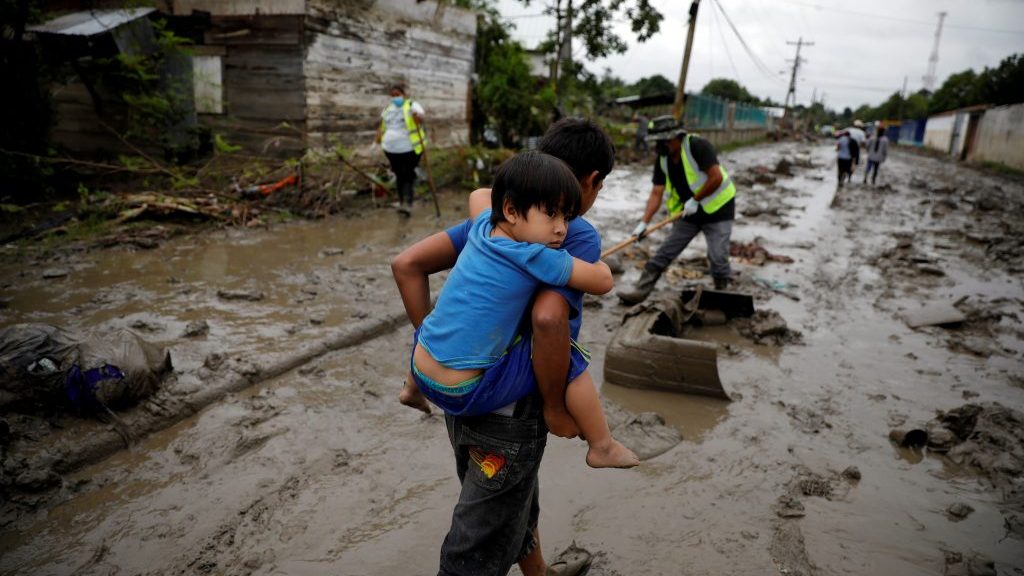
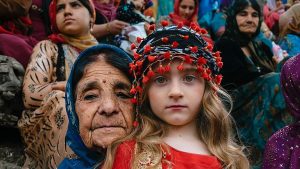
This matters because climate impacts are never evenly distributed. Across the region, those facing the greatest danger are often the people who contributed least to the problem. Indigenous peoples, Afro-descendant communities, rural families, migrants, women and small-scale farmers are among those most exposed to floods, droughts, food insecurity and displacement. Their vulnerability is not accidental. It is rooted in long histories of exclusion, lack of public investment and political systems that too often fail to protect those on the margins.
One of the clearest examples is displacement. Rising seas and extreme weather are forcing communities to leave ancestral territories, sometimes permanently. In Panama, the relocation of Guna families from the Guna Yala archipelago has been described as one of the first major cases of climate-related displacement in Latin America. On paper, such relocation may appear to be a form of adaptation. In reality, moving entire communities carries profound social and cultural costs. For Indigenous peoples, territory is not simply land or housing. It is identity, memory, livelihood and self-determination. When communities are uprooted, the loss extends far beyond geography.
At the same time, those who defend land, forests and rivers are paying an extraordinary price. Latin America remains the deadliest region in the world for environmental defenders. The killings of activists in countries such as Colombia, Mexico and Honduras are not isolated tragedies; they expose a broader pattern of state failure. Many of those targeted are Indigenous and Afro-descendant leaders who oppose mining, deforestation, agribusiness expansion or other large-scale projects imposed on their territories. Instead of being protected, they are too often threatened, criminalised or abandoned. Their persecution reveals a devastating contradiction: people defending ecosystems essential to the public good are treated as obstacles rather than as rights-holders and guardians.
This contradiction runs through much of the region’s climate policy. Governments increasingly acknowledge the climate emergency in speeches and international forums, yet many continue to expand fossil fuel extraction, tolerate destructive land use and pursue development strategies that degrade ecosystems. The gap between rhetoric and reality is stark. Climate commitments are presented as evidence of progress, while policies on the ground still privilege short-term economic returns over long-term resilience, democratic participation and environmental justice.
That approach is especially dangerous in Latin America because climate shocks hit societies already shaped by structural inequality. A drought in an affluent area and a drought in an excluded rural community do not produce the same consequences. The ability to adapt depends on access to water systems, health care, infrastructure, secure housing, state support and political voice. Where these protections are missing, climate hazards quickly become humanitarian emergencies. In this sense, climate vulnerability is not only about nature; it is about power.
For that reason, climate justice in Latin America cannot be reduced to emissions policy alone. It must begin with rights. The right to water, food, health, housing, property, culture and a healthy environment all come under pressure when climate harms intensify. So does the right of communities to remain in their territories and to participate meaningfully in decisions that affect their futures. Any serious response must therefore address both the environmental threat and the political conditions that make certain populations disposable.
The region already has an important framework for moving in that direction: the Escazú Agreement. Its promise lies in something fundamental but often denied in practice: access to environmental information, public participation in decision-making and access to justice. It also recognises the urgent need to protect environmental defenders. If implemented fully, Escazú could help shift environmental governance away from secrecy and exclusion toward accountability and public rights. But its potential remains underused. Ratification and implementation have been uneven, and without stronger political commitment, the agreement risks becoming an underutilised instrument in a moment that demands far more.
Recent developments in the inter-American human rights system offer a stronger legal and moral foundation for action. The Inter-American Court of Human Rights has continued to reinforce the link between environmental protection and human dignity, affirming that communities have the right to defend their territories and demand accountability when those rights are threatened. Its Advisory Opinion OC-32/25, requested by Chile and Colombia, is especially significant because it frames the climate emergency in unmistakably human rights terms. It clarifies that states cannot treat climate action as a matter of political convenience. They have concrete obligations to prevent harm, act with due diligence and protect the rights endangered by environmental destruction.
This matters not only for governments but also for businesses. The region’s transition away from fossil fuels cannot repeat the logic of sacrifice that has long defined extractive development. Renewable energy and critical mineral projects may be essential to decarbonisation, but they are not automatically just. Large infrastructure, mining and energy projects can still damage ecosystems, contaminate water sources and violate community rights if imposed without safeguards. A genuine transition must be fair as well as green. That means free, prior and informed consent, effective participation, strong environmental oversight and respect for territorial rights.
The Inter-American system and REDESCA have both made this point clearly: climate policy that ignores inequality will fail, and an energy transition that reproduces dispossession is not a solution. The region does not need a new version of the same old model under a cleaner label. It needs a transformation in how states define progress, how companies are held accountable and how affected communities are included in shaping policy.
That transformation must be democratic at its core. International climate finance and cross-border solidarity are important, but they cannot substitute for domestic accountability. Lasting change depends on stronger institutions, independent courts, protection for civil society and real public participation. Communities most affected by environmental harm must not be treated as passive recipients of policy. They must be recognised as political actors with knowledge, rights and authority.
Latin America’s climate crisis is therefore not just about adaptation plans or carbon strategies. It is a test of whether states are willing to defend the people most exposed to harm, restrain abusive economic interests and rethink development itself. The science has long made the environmental stakes undeniable. Human rights law is now making the legal stakes equally clear.
The central question is no longer whether the climate emergency is real. It is whether governments in the region will continue to respond with delay, contradiction and exclusion, or whether they will finally recognise that climate action and human dignity are inseparable. In Latin America, the future of climate policy will be judged not only by emissions reduced, but by lives protected, communities heard and rights upheld.