The war with Iran is doing collateral damage to the world economy — and the worst of it may still lie ahead. Since U.S. and Israeli missile strikes killed Supreme Leader Ayatollah Ali Khamenei on February 28, the Strait of Hormuz — the narrow chokepoint through which roughly a fifth of the world’s oil passes every day — has been effectively shut down. The consequences are rippling outward in ways that economists say were long feared and are now, unavoidably, real.
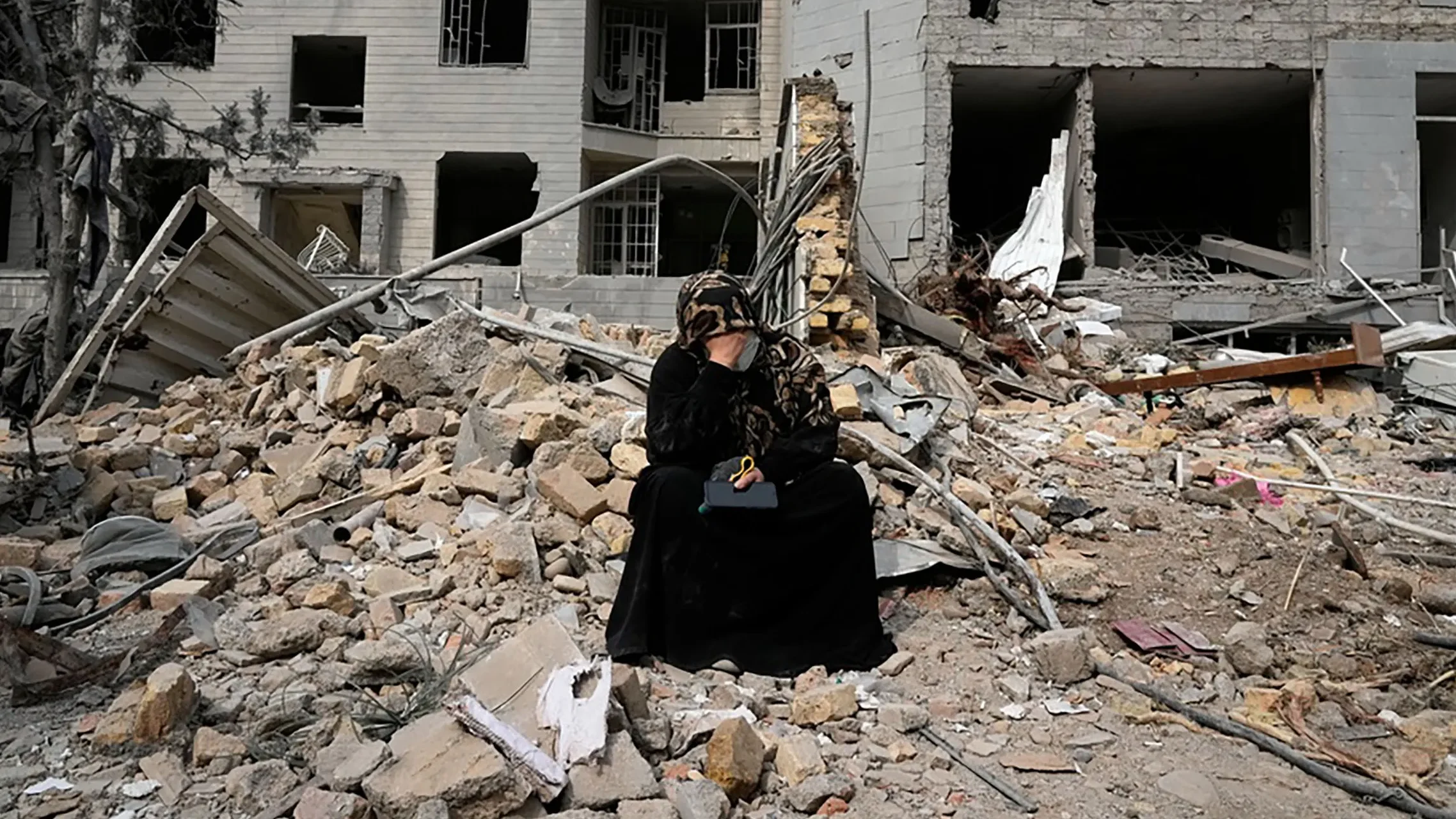
“For a long time, the nightmare scenario that deterred the U.S. from even thinking about an attack on Iran was that the Iranians would close the Strait of Hormuz,” said Maurice Obstfeld, senior fellow at the Peterson Institute for International Economics and former IMF chief economist. “Now we’re in the nightmare scenario.”
A world economy that has absorbed shocks before — but not this one
The global economy has shown remarkable durability in recent years, weathering the Russian invasion of Ukraine and sweeping U.S. tariffs in 2025. Many economists believe it can stagger through this crisis too — but the Hormuz closure introduces a variable that past shocks did not. There is simply no spare capacity elsewhere to compensate for 20 million barrels a day going missing. “There’s no excess capacity anywhere in the world that can fill that gap,” said MIT economist Simon Johnson, the 2024 Nobel laureate in economics.
The IMF’s managing director, Kristalina Georgieva, has put numbers to the risk: every sustained 10% rise in oil prices adds 0.4 percentage points to global inflation and shaves up to 0.2% off world output. With prices having nearly doubled from their pre-war level, the arithmetic is uncomfortable.
The effects are far from uniform. Oil-importing economies — most of Europe, Japan, South Korea, India and China — face the sharpest immediate pain. Pakistan is in a particularly acute position, importing 40% of its energy and relying heavily on liquified natural gas from Qatar, supplies now cut off by the conflict. Its central bank may be forced to raise interest rates even as the economy contracts — precisely the wrong medicine, but potentially unavoidable if inflation accelerates. By contrast, oil producers outside the conflict zone — Norway, Canada, Russia — stand to benefit from elevated prices with none of the physical risk.
Food, fertilizer and the compounding crisis
Energy is not the only pressure point. Up to 30% of global fertilizer exports — urea, ammonia, phosphates and sulfur — also move through the Strait of Hormuz. With those shipments disrupted, agricultural input costs are rising, with predictable effects on food prices downstream. For wealthy economies, this registers as inflation. For low-income countries already operating at the edge of food security, it risks tipping into shortage.
“Any countries with significant agriculture sectors, including the United States, would be vulnerable,” Obstfeld said. “The effects are going to be most devastating in low-income countries where agricultural productivity may already be challenged.”
The central bank bind — and the ghost of the 1970s
For central banks, the war has revived a dilemma that policymakers hoped was confined to history. Higher energy prices stoke inflation; but they also suppress economic growth. The Federal Reserve, already divided between those who see a weakening labor market and those watching inflation remain above the 2% target, now faces that tension in sharper form.
Johnson warns the crisis will “massively intensify” the internal debate at the Fed and make rate cuts significantly less likely. The institutional memory runs deep: in the 1970s, central bankers misjudged an energy shock as temporary and kept rates too low for too long, allowing inflation to become entrenched. That mistake took years and a severe recession to correct. “They thought it was a temporary shock,” Johnson said. “They ended up regretting that.”
Much depends on duration. If oil prices retreat toward $70–80 a barrel, analysts at Capital Economics believe the global economy may absorb the shock without lasting damage. But the path to de-escalation is unclear. Iran’s newly announced leader, Mojtaba Khamenei — son of the slain ayatollah and, by most accounts, an even harder-line figure — appears unlikely to offer easy concessions. And the U.S. endgame remains undefined. “It’s not clear when Trump is going to declare victory,” Johnson said. Until that question has an answer, the economic uncertainty will not lift.