MigraACT — Youth Migrants in Action, co-funded by the European Union under the Erasmus+ Capacity Building in the field of Youth programme, brings together partners from Germany, Italy, Lebanon and Tunisia. The project works at the intersection of migration, youth empowerment, employability and social inclusion, with a clear focus on creating both social and economic impact.
The initiative is designed to strengthen the capacities of youth workers and educators who work directly with young migrants. Rather than treating inclusion as a broad policy ambition, the project is developing practical, non-formal education tools that can be used in real youth-work settings. These tools are intended to help young migrants better recognise their skills, present themselves with confidence, access guidance and improve their readiness for education, training and employment.
The project has already completed an important research phase. National research from the partner countries is now available, providing evidence on the barriers faced by young migrants in different contexts. While the realities differ from country to country, the findings point to several shared challenges: limited access to stable employment, weak recognition of informal and prior skills, interrupted education pathways, language barriers, psychosocial vulnerability and a lack of adaptable tools for youth workers.
In Germany, the research highlights the importance of qualification recognition, access to training and sustainable labour-market integration. In Italy, it points to precarious work, overqualification, fragmented support systems and barriers affecting young migrants’ transition into employment or further education. In Lebanon, the findings underline the pressures of informality, legal insecurity, limited access to decent work and the need for safe, low-threshold support spaces. Across the partner countries, the research confirms that employability cannot be separated from confidence, belonging, mental well-being and access to guidance.
This is where the project’s social impact becomes visible. By equipping youth workers with stronger methodologies, the project supports safer and more inclusive spaces for young migrants to participate, share experiences and build trust. Activities linked to storytelling, peer learning, public speaking and self-expression are expected to help young people strengthen their confidence and sense of agency.
The economic impact is equally central. The project is now using the research findings to shape a shared training format that will focus on employability, skills recognition, CV-building, communication, HR-related competences and workplace readiness. Many young migrants bring valuable experience from previous education, informal work, community roles, care responsibilities and migration journeys, but these competences often remain invisible to employers and institutions. The training format will help youth workers support young migrants in identifying, documenting and presenting these skills more effectively.
The consortium is currently working on the training format, following a research-to-practice approach: national research informs module design; partners co-develop training content; the draft format will be tested during an international training course in Sassari, Italy; and feedback will be used to refine the final manual. Each module is expected to include participatory non-formal education activities such as role play, simulations, peer feedback, competence mapping and practical self-presentation exercises.
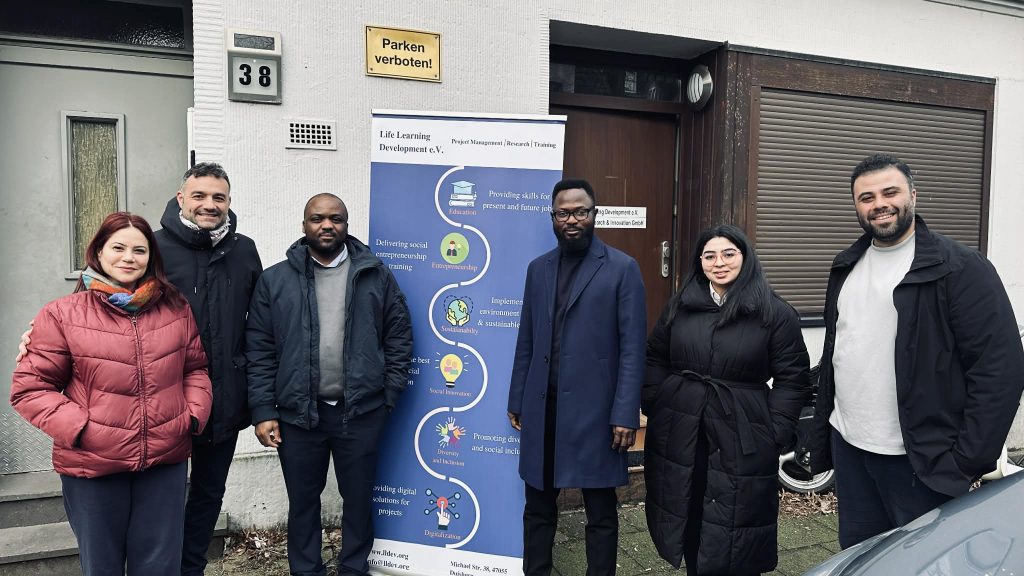
The partnership combines complementary expertise. Life Learning Development e.V. in Germany coordinates the project, MV International in Italy contributes to non-formal education and dissemination, Offbeat in Lebanon leads training design with a focus on empowerment and capacity building, and Les Scouts Tunisiens supports local engagement and testing with young migrants. By grounding its activities in national research and moving into training development, the project is already creating impact: connecting evidence with action, building the capacity of youth workers and opening pathways for young migrants to participate more fully in social and economic life.