
President Donald Trump’s appearance in Suffern, New York last Friday was framed as an economic policy event — a showcase for the expanded state and local tax deduction his administration championed. But the rally unfolded in a way that, for both supporters and critics, encapsulated something deeper: the persistent difficulty of translating policy wins into political narratives in a deeply divided country.
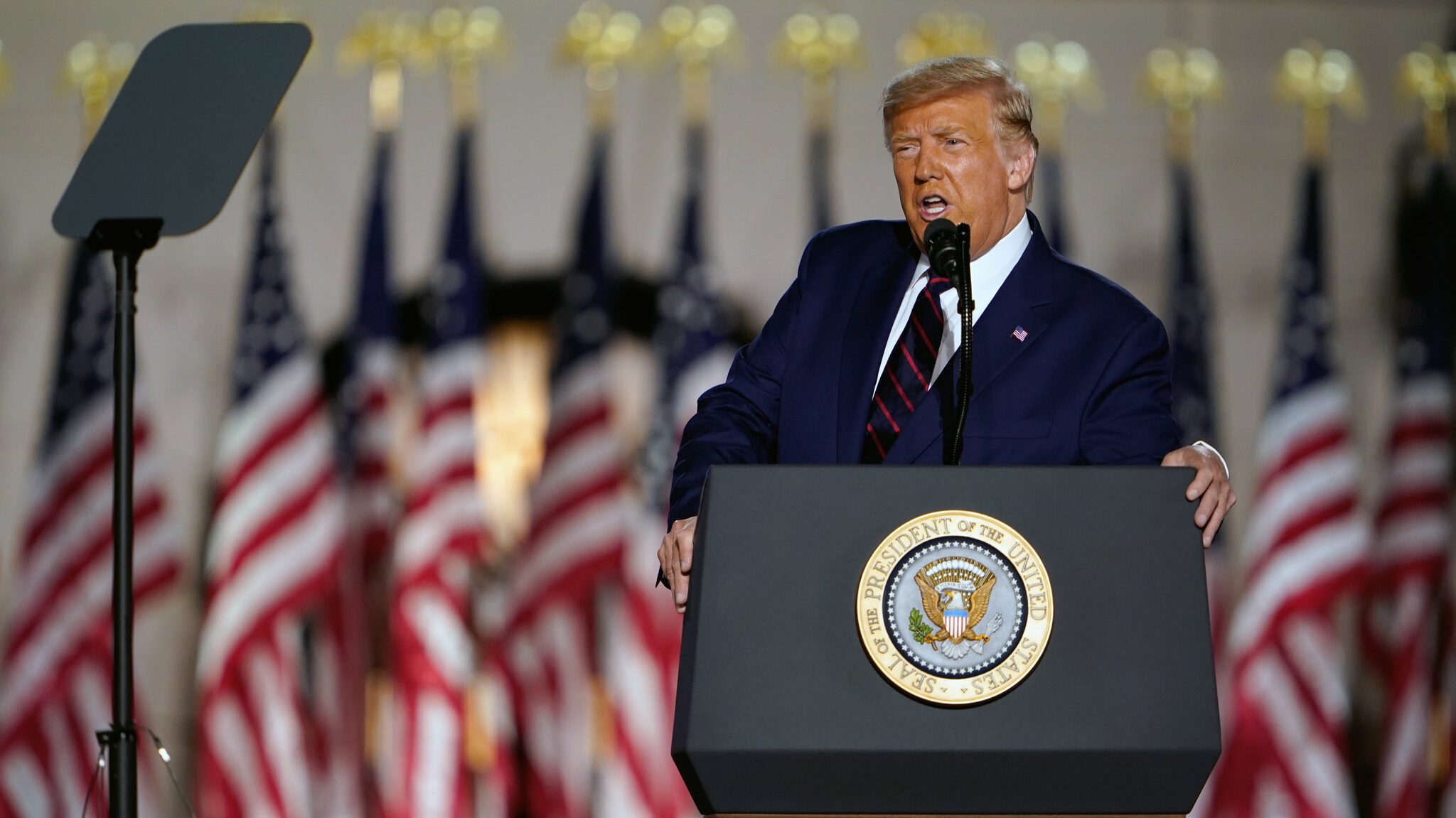
Trump veered quickly from the scripted message, riffing on voter ID laws, urban crime, transgender athletes in sports, and a new nickname for the Democratic Party — “Dumocrats” — before eventually landing on the tax law he had signed. The detours were not incidental. They reflected a deliberate, if often instinctive, rhetorical strategy: energize the base first, make the policy case second.
The SALT calculation
At the center of the visit was the SALT deduction — a policy that, unusually, has crossover appeal in a high-tax blue state like New York. The expansion of the deduction from $10,000 to $40,000 is a tangible benefit for middle-class homeowners in districts like NY-17, where local property taxes can dwarf the old cap. Rep. Mike Lawler, the Republican whose reelection the event was designed to support, had lobbied hard for the change, earning a “Mr. SALT” moniker he’s now wearing — literally — on a red ball cap.
The policy substance is real. Constituents in Lawler’s district are reportedly receiving refund checks ranging from $5,000 to $20,000 under the new law. For many families, that is not an abstraction. And yet the political environment in which that message must be delivered is anything but straightforward.
Lawler’s balancing act — and what it says about the party
Lawler occupies an increasingly rare position in American politics: a Republican elected in a district that voted for the opposing presidential candidate. Of the three House Republicans in that category, Lawler is the only one actively embracing Trump — a strategic bet that his personal record can outrun national headwinds while base turnout carries him across the finish line.
“The people who hate the president — and that’s their sole basis for their vote — are likely never voting for me,” Lawler told the Associated Press. It is a candid acknowledgment of the segmented electorate modern incumbents must navigate: reliable partisans on one side, persuadable moderates in the middle, and a growing share of voters who make choices almost entirely through the lens of presidential approval.
Sociologically, this pattern reflects a broader nationalization of local politics. Congressional races that once turned on local issues — a hospital closure, a highway project, a factory — now function increasingly as referendums on the presidency. For incumbents in swing districts, that makes the president’s approval rating not just relevant but potentially determinative.
Approval, economics, and the gap between data and perception
The backdrop for the New York rally is a White House under pressure. Roughly one in three Americans approves of Trump’s economic stewardship, down from roughly two in five at the start of his second term. Rising gasoline prices — driven partly by the ongoing conflict with Iran — have complicated an administration that came to power promising immediate relief from cost-of-living pressures.
That gap between policy deliverables and public perception is a recurring feature of modern economic politics. Administrations on both sides have struggled with it: favorable aggregate statistics that fail to reach voters who are experiencing their own economic realities differently. Tax refunds that arrive in April may not offset the psychological weight of prices at the pump in May. A quadrupled SALT deduction helps homeowners more than renters, and disproportionately benefits higher earners even within a middle-class district.
Democrats have been quick to characterize the event as politically motivated, dismissing it as a visit to “tout a disastrous economy.” Republicans counter that the president’s district-level numbers remain strong and that Democratic approval is declining faster. Both claims are likely partially true — and neither captures the ambivalence that often characterizes voters in swing communities.
The rally as social ritual
Perhaps most revealing was the event’s tone. Over 5,000 people registered in the first 12 hours the signup opened — a figure that suggests, whatever the polling numbers, Trump retains a powerful ability to mobilize. The rally format itself — crowd-tested nicknames, audience polling on what to call a predecessor, complaints about locked-up pharmacy shelves — functions less as policy communication and more as a shared cultural experience for attendees.
This is not unique to Trump. Political rallies have always served a communal function, reinforcing group identity as much as conveying information. What distinguishes the current moment is the degree to which that social function has become the dominant register of political communication — and the challenge that poses for candidates like Lawler, who must translate raw political energy into a durable governing coalition in a district that defies easy categorization.
The November race will be a test of which force proves stronger: the tangible material benefits of a tax law that many constituents can measure in their bank accounts, or the national political currents that increasingly determine outcomes even in local races. Lawler is wagering it will be the former. The evidence, so far, is genuinely mixed.