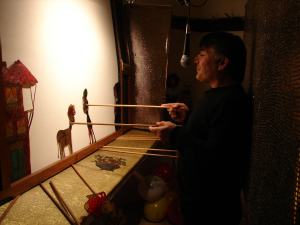
From Shadow Plays to Project Hail Mary: History of the Cinema

From the times of shadow-plays, to individual picture frame slideshows, to films containing motion pictures imprinted on them, the field of the cinema arts has progressed a long, long way. Now, often we flee to the seats of the cinema to witness the creative works of the minds the film industry decided to support – and often are we subjected to a treat of a movie – and my most personal experience of that category was Project Hail Mary – directed by Phil Lord and Christopher Miller – the same duo that is involved in the Spider-Verse trilogy. From that, to the other end of the spectrum, in which I will avoid singling out films to avoid wars related to the same – cinema it in of itself has come along a long way. Let us take a look at its journey, and the future of the same.


Continue ReadingFrom Shadow Plays to Project Hail Mary: History of the Cinema

Chhau Nritya: The Ritualistic Dance of Devotion and Drama

India is a land of cultural plurality where every region celebrates its uniqueness through art, dance, and tradition. Among the many lesser-known but deeply rooted dance forms is Chhau Nritya, a performative art from Eastern India that intertwines ritual, mythology, and theatrical grandeur. Often performed in rural belts of Odisha and West Bengal, especially during sacred festivals, Chhau Nritya is not just a dance—it is a visual dialogue with the divine.

Continue ReadingChhau Nritya: The Ritualistic Dance of Devotion and Drama

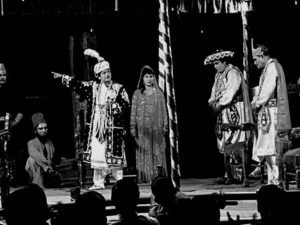
The Vibrant World of Jatra Pala: Exploring Bengali Theatre Culture

In the rich tapestry of Bengali culture, few art forms capture the essence of tradition, storytelling, and community spirit quite like Jatra Pala. Originating in rural Bengal centuries ago, Jatra Pala, often referred to simply as Jatra, is a vibrant and dynamic form of folk theatre that continues to captivate audiences with its colorful performances, melodious music, and compelling narratives. In this article, we delve into the fascinating world of Jatra Pala, exploring its history, evolution, and enduring significance in Bengali theatre culture.

Continue ReadingThe Vibrant World of Jatra Pala: Exploring Bengali Theatre Culture

Tracing the Origins of Yoga: Insights from Ancient Indian Texts and Archaeological Finds

Yoga, a timeless practice rooted in ancient Indian culture, finds its origins in texts like the Vedas dating back to 1500 BCE, where it’s described as a spiritual discipline uniting individual consciousness with the divine. The Upanishads further develop yoga as a systematic path to spiritual realization, focusing on mastery of the senses and inner peace. Archaeological findings, including Indus Valley seals and structures resembling early yoga studios, suggest yoga’s presence in ancient civilizations like Mohenjo-Daro. Over centuries, yoga evolved, culminating in the Yoga Sutras of Patanjali around the 2nd century BCE, which codified yoga into Ashtanga Yoga. Yoga’s journey embodies the quest for spiritual enlightenment and holistic well-being, inspiring lives worldwide.

Continue ReadingTracing the Origins of Yoga: Insights from Ancient Indian Texts and Archaeological Finds

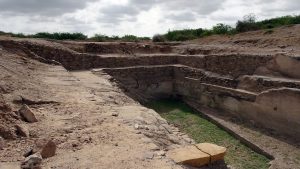
Indus Valley Civilization: One of the World’s earliest Civilizations

The Indus Valley Civilization which is also known as the Harappan civilization is one of the world’s earliest civilizations. It is the earliest urban culture of the Indian subcontinent. The dates of the civilization are about 2500-1700 BCE, though the southern sites may have lasted later into the second millennium BCE. Among the world’s three earliest civilizations Indus civilization was the most extensive and the other two were Mesopotamia and Egypt. Its modern name derives from its location in the valley of the Indus River. The City of Harappa was the first one founded in the modern era. None of the names derive from any ancient texts because, although scholars believe that people of this civilization developed a writing system known as Harappan Script it has not yet been deciphered. The Indus Valley Civilization extended from modern-day northeast Afghanistan to Pakistan and northwest India.

Continue ReadingIndus Valley Civilization: One of the World’s earliest Civilizations

China’s Ancient History with its Gender and Children’s Development

Embarking on an enchanting journey through ancient China, artifacts and tombs hold silent stories of lives past, unveiling how gender roles and childhood molded the ancient world. Burial practices, reflected in the Shang, Zhou, and Han dynasties, reveal profound insights into societal roles. Artifacts illuminate women’s lives, showcasing daily roles and subtle influences. Childhood relics paint a vivid picture of nurturing and education during various epochs. In the Han Dynasty, leaders recognized children’s pivotal role, laying the foundation for a robust empire. The evolving narrative underscores cultural evolution and invites reflection on ancient norms.

Continue ReadingChina’s Ancient History with its Gender and Children’s Development