Iraqi Kurds have lived through air bombardments, chemical weapons, village destructions and mass deportations under successive Iraqi regimes, culminating in the Anfal campaign and the Halabja chemical attack that killed thousands of civilians and wiped out whole communities. Even after 2003, when the Kurdistan Region gained federal recognition, Baghdad has continued to centralize power and use budget cuts, oil control and court rulings to squeeze Kurdish autonomy, keeping Kurdish society in a permanent state of political and economic precarity.
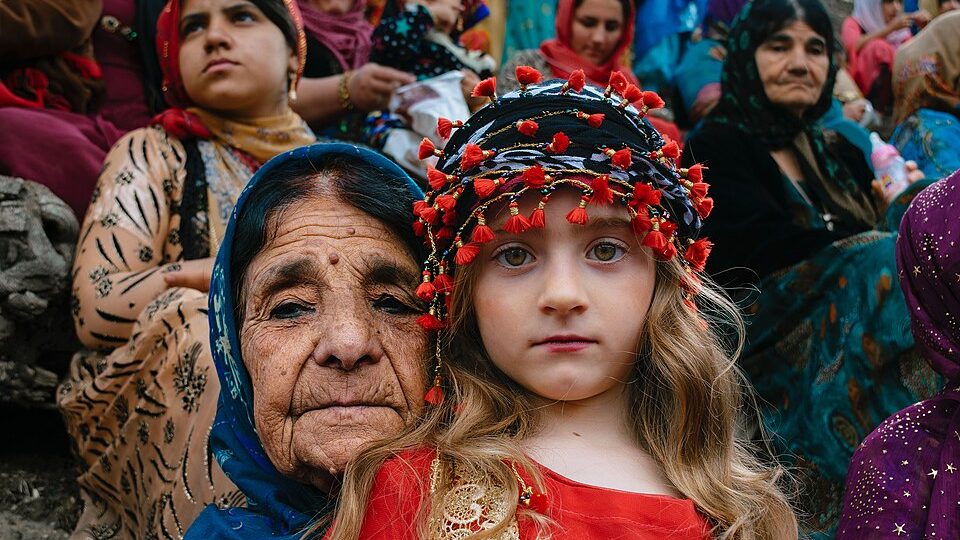
For ordinary Kurds, this history is not abstract: it lives in family stories of disappeared relatives, in destroyed villages that were never rebuilt, and in a constant fear that any political gain can be revoked overnight. The result is a society that has been forced to rebuild itself multiple times inside the same borders, always under someone else’s rules, and never secure that “citizenship” actually means protection.
Today, as the war against Iran enters its third week, Kurdish commanders tell reporters that Trump “needs us” if Washington wants to win a ground war, while the White House insists that sending US ground troops is “not part of the plan.” Behind those quotes is a familiar script: the US quietly talks to multiple Kurdish factions, intelligence agencies work on arming some of them, and everyone knows that if the political winds change, Kurdish fighters could once again be left alone to face revenge from Tehran or Baghdad.
This is not new. During the Iran–Iraq war, Kurds aligned with Iran against Saddam and paid with genocidal retaliation; in 1991 they rose up after a US call to “revolt” and were then exposed to brutal counter‑attacks before the no‑fly zone partially froze the front lines. In 2017, after fighting alongside the US‑led coalition against ISIS, Kurdish authorities held an independence referendum, only to see Baghdad move militarily against them, retake disputed areas like Kirkuk, and impose new constraints that have steadily eroded their autonomy.
Decades of being alternately courted and abandoned have produced a deep culture of mistrust among Kurds toward state institutions and outside powers, and even toward their own political parties when those are seen as trading local security for foreign backing. Families are stretched across borders in Iraq, Iran, Turkey and Syria, living under different legal systems, security agencies and armed groups, which turns everyday acts — crossing a border, joining a protest, posting online — into political calculations with potentially lethal consequences.
At the same time, Kurdish regions are expected to absorb repeated waves of displaced people and fighters: after Arabization and village destruction under Saddam, after the post‑1991 uprisings, after the war on ISIS, and now potentially as staging grounds in a war with Iran. This constant emergency undermines schooling, mental health, women’s participation in public life, and long‑term economic planning, locking many Kurds into a survival economy where war is both the main employer and the main threat.
For a magazine like The Social Digest, the Kurdish story is not only about borders and battle maps; it is about how an entire people have been socialized into expecting betrayal as a normal part of politics, and how that shapes trust, solidarity and imagination for the next generation. The same governments that praise Kurdish fighters as “brave allies” in press conferences often refuse to support Kurdish self‑determination, enforce centralist court rulings, or guarantee the political rights of Kurdish citizens once the immediate crisis passes.
That gap between recognition in war and silence in peace is where the real social story lies: in classrooms where teachers explain why the village on the textbook map no longer exists, in homes where children know the names of prisons and mass‑grave sites before they know the names of universities, and in refugee camps where young Kurds debate whether to join militias, migrate, or try once again to build a normal life on unstable ground. Your article can connect this long history to the current calls for Kurdish participation in the Iran war by asking a simple but unsettling question: when the fighting stops, who will still stand with them?