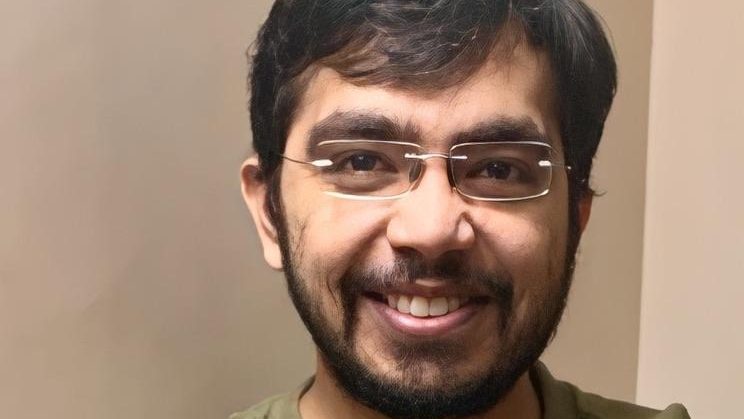
Vishal Rewari is shaping how digital products grow in an AI-first world—without losing sight of real human problems. With experience spanning McKinsey, Deloitte, Housing, and 40+ organizations, and backed by an IIT Bombay education, he operates at the intersection of data, technology, and business impact. His stance is clear: AI should drive adoption and outcomes, not vanity innovation. In this conversation, he breaks down how GenAI is transforming SaaS, why strong data foundations matter more than hype, and what founders must get right to build products that truly scale.
The Social Digest: Hello Vishal, you mentioned that your life changed on July 4th, 2005, at 5:52 UTC when NASA launched the Deep Impact mission, and you were part of it as a 15-year-old fromAhmedabad, India. Can you take us back to that moment and tell us how it happened andwhat it meant to you, and also could you please briefly mention your work experience?
As a child, I got curious about astronomy, while my classmates were reading fiction, I was reading books on UFOs, Comets and Universe and even started stargazing at night. The curiosity led me to join an astronomy club run by 2 of our school teachers in Ahmedabad. One fine day, we came to know about the Deep Impact Mission of NASA. NASA was going to launch a satellite that would hit the Tempel 1 Comet. The purpose was to understand Comets better and was part of a larger strategy to know if we can change the Comet path in time to avoid a comet hitting earth
NASA rolled out the participation to all astronomy clubs in the world and they would be carrying the disk with the names of humans who will participate in this mission to the comet so it will always stay on Comet. Hence, my name was on that disk which started its journey on NASA mission from Jan 12, 2005 and hit Comet on July 4 2005 traveling 429 million km and collided with comet at speed of 37000 kms/h. The mission was extensively observed by telescopes on Earth and I became part of 0.0000001% of population in the world whose name was on the disk.
The Social Digest: You’ve worked with a diverse range of organizations, from startups to government institutions, and have achieved significant impact. What common strategies or principles do you apply across these different contexts to drive success? What kind of critical situations did you face while growing? Would you like to share any unexpected situations & how you tackled them?
When I was small I used to play football every day, but one thing that was always particular that our principal or the father of the school used to make me play it with students who are quite older than me like six or seven years older than me that instilled a sense of how to push yourself beyond your capacity to build and compete with them how to learn fast and be more quick whenever I am working with someone else, there are always much more experience than I am and what I know my contribution comes in effort that I can put in and how much contributions that I can
The upbringing and the education has played a major role; I have been fortunate enough to study in top institutions and a competitive environment. One thing that I have achieved is how to use whatever knowledge I have for the betterment of others, so even while I was developing software the thought was his voice. How can you change the lives of people while I was developing smarter software, which takes use of artificial intelligence technology learning mathematics the question is how can I change the life of people or how can I solve their problems. So now I ask how can I contribute positively to lives of people around me with what I know.
The Social Digest: You recently partnered with Mixpanel to drive digital product adoption across APAC. Can you tell us more about this partnership and how it’s helping companies improve their onboarding and retention strategies?
In Jan 2022, I started Optiblack to consult with companies to grow their software products. When we started working with founders and enterprises, we used to suggest changes in their products. Our clients used tohow do we know what metric it moved? Or what was the impact?
So we realised that many companies do not have an underlying framework that helps them measure product performance and use data for decision making. That is when the partnership with Mixpanel happened so we can build that framework for companies and help them improve their product performance metrics.
This helps them identify which customers are dropping off at what point so they know which flow or step is creating a problem and solving these helps make onboarding and retention better
The Social Digest: Looking ahead, what do you see as the biggest challenges and opportunities for SaaS companies in terms of data analytics and automation in the next few years?
Every SaaS company is undergoing an AI transformation and they are adding an AI layer. To make AI successful they need data. This is where tracking user behaviour, understanding data framework and building strong foundation in data will become important
The Social Digest: You’re active on LinkedIn with many followers, sharing insights on SaaS onboarding and retention, and you’ve written about topics like context-aware recommender systems. What motivates you to share your knowledge this way, and how has it impacted your work or the community? According to you, what are the best ways to build strong connections via LinkedIn & how to create personal branding?
Focus on what you will be known for on LinkedIn and how you can contribute. If you see someone struggling share your knowledge. If you see someone stuck, help them overcome. This is the reason why we write on LinkedIn to share what we have learned and help others achieve the same.
Once people recognize you as an expert in a certain field or topic, your strong connections and personal branding will follow. Start documenting and sharing your knowledge
The Social Digest: With your background in Industrial Engineering and Operations Research from IIT Bombay, how has that education shaped your approach to solving business problems, especially in the tech and analytics space?
Thank you for asking this question. I believe this has played the most important role. Before IIT Bombay I knew how to create software, after IIT Bombay I learned how to create software that solves a business problem. Operations research is the science of decision making, organizations when they have to take decisions at a large scale make use of the mathematical models, data and AI to solve their problems. The approach is always the same understand whose life will change and by how based on a certain decision.
The Social Digest: You’ve recently become an investor in Fathom – AI Meeting Assistant. What drew you to this investment, and how do you see AI transforming the way meetings are conducted in businesses?
In the current line of work, I spend almost entire day in meetings and this has become a norm for managers post covid. So I was already using Fathom notetaker to get efficiency and remember what someone said.
The Social Digest: Outside of work, what are some hobbies or activities that you enjoy, and how do they help you recharge or bring new perspectives to your professional life?
Recently I have started working with a personal trainer in the gym to get better in health and body shape. It helps you build discipline, increases focus and makes me more regular in Gym the more deals I close.
The Social Digest: If you could give one piece of advice to aspiring entrepreneurs or professionals in the tech and analytics field, what would it be?
My advice is simple: always play to your strengths and stay extremely mindful of cash flow. Your strengths help you create real impact and move faster, while cash flow is what keeps everything alive. No matter how good the idea is, without cash discipline, nothing scales.
This interview was conducted by Ansh C Vachhani, The Social Digest on 12/01/2026. If you have any interview recommendations or have a story that you want to share with our readers, get in touch with our editor Vedant Bhrambhatt, at editor@thesocialdigest.com