
From the times of shadow-plays, to individual picture frame slideshows, to films containing motion pictures imprinted on them, the field of the cinema arts has progressed a long, long way. Now, often we flee to the seats of the cinema to witness the creative works of the minds the film industry decided to support – and often are we subjected to a treat of a movie – and my most personal experience of that category was Project Hail Mary – directed by Phil Lord and Christopher Miller – the same duo that is involved in the Spider-Verse trilogy. From that, to the other end of the spectrum, in which I will avoid singling out films to avoid wars related to the same – cinema it in of itself has come along a long way. Let us take a look at its journey, and the future of the same.
In the ye olden days, at first there were no means to actually display a rapid succession of frames to portray a motion – so they made it themselves. There was a centuries long tradition of depicting motion by shadow play, or by magic lanterns.
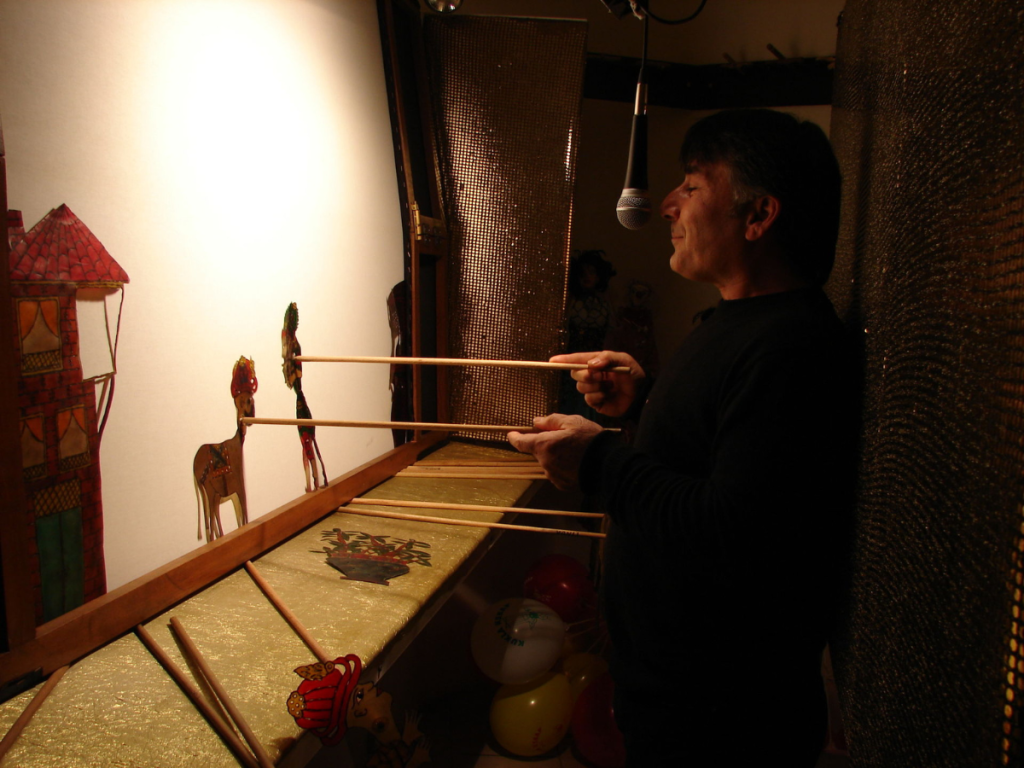
[1] A Shadow play from the Karagoz Theatre (Wikimedia Commons, Wikipedia)
Christiaan Huygens, often well known as the “first theoretical physicist”, invented the magic lantern – which was not too dissimilar from a projector in its working – displaying an image of a photograph on a wide wall. Though the photo would have to be inserted upside down to maintain the correct orientation of the image.
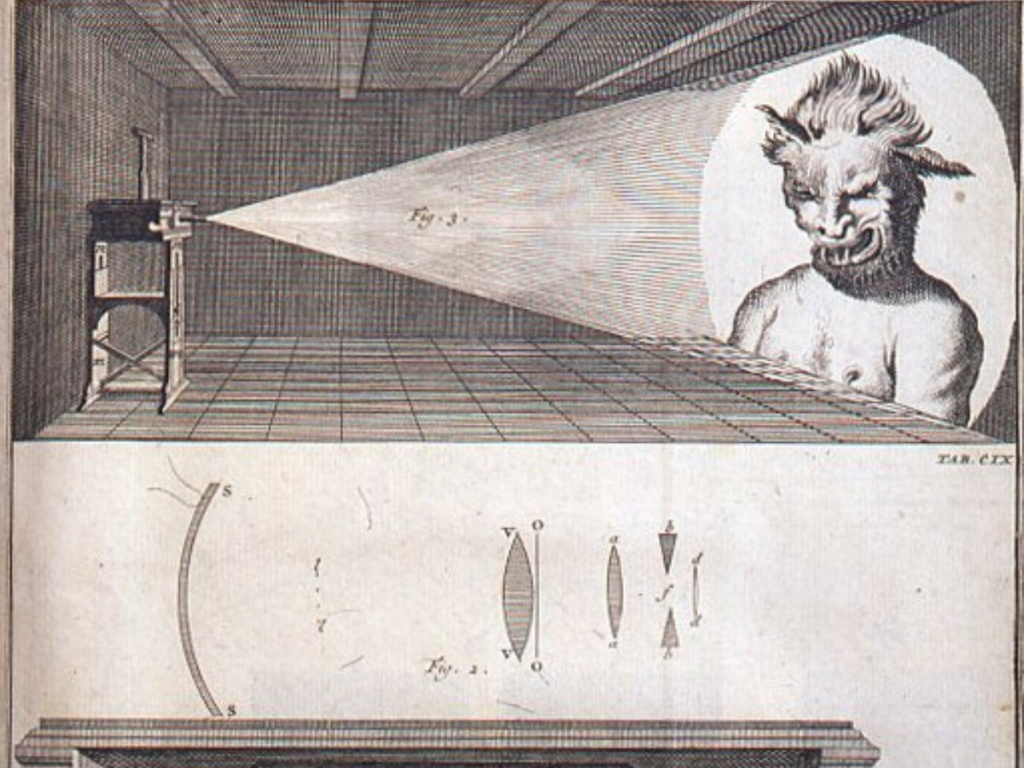
[2] By Jacob ‘s Gravesande – scan from Physices Elementa Mathematica, Public Domain, https://commons.wikimedia.org/w/index.php?curid=50615645
Flashing Lights (no not the Kanye West song), when flashing on and off many times per second, also aided in the development of the cinematography during its infancy. Stroboscopic animation – first developed by Michael Faraday (yes, the bloke behind the Faraday’s Law!) and then perfected by Simon Stampfer, with the first ever recording screening of such an event dating to 1847. The drive to capture motion wasn’t limited to earthly subjects; early cinematography found a natural synergy with the space sciences. The invention of the photographic revolver allowed astronomers to document celestial events, such as the transit of Venus across the sun. By capturing sequential phases of the transit, the Janssen Revolver effectively created an early stop-motion film of the cosmos.
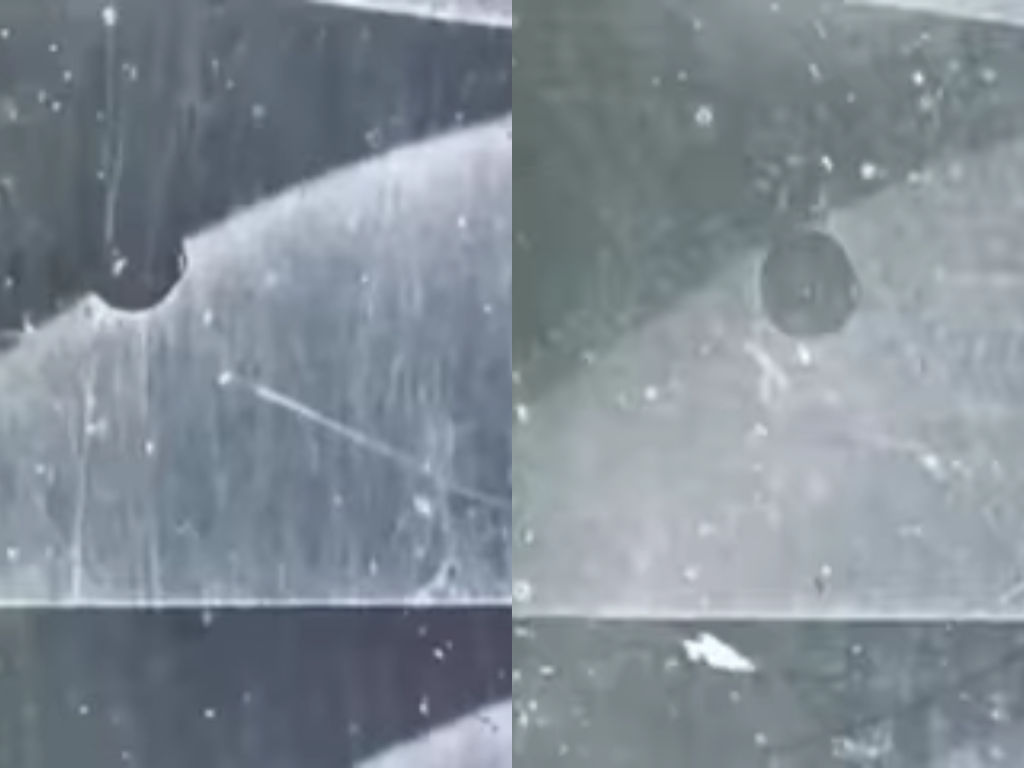
A sequence of stills from the stop motion video, capturing the transit of Venus:
[3]: https://commons.wikimedia.org/wiki/File:1874_Pierre_Jules_C%C3%A9sar_Janssen_-_Passage_de_Venus.webm
The (quasi) first GIF – a man on a horse! Several photographs were taken of a man riding on a horse, from a line of cameras on the track (the man being Leland Stanford – who established and founded Stanford University – and then were stitched together to make a motion picture, or placed in a device known as a zoetrope – to allow them to be viewed in quick succession – creating an illusion of a motion film. It received worldwide praise. This inspired innovations and thus, the chronophotograph gun was invented – which was able to capture 12 distinct pictures in a second – 12 frames. Such works allowed for properly being able to study the animal locomotion movements – as the earlier attempt – the one of the man on the horse – was somewhat criticised to have ungraceful horse leg movements. Although at first, the images were recorded on a single plate – being superimposed on a plate rather than separate pictures (in general).
Then came the era of the projectors. (Quasi- and otherwise). A rotating disk that had pictures (dubbed as a Electrotachyscope), backlit by a stroboscopic light source (flashing) allowed for viewing a picture for 4-7 people at one time. Peepboxes were a major global success that allowed for viewing the picture in a dark room. This was the beginning of traditional projectors and cinema as we know it as in 1897, the inventor of the rotating disk projector unveiled his patented 2 wheeled projector – for a 300 people audience in a dark room for a screen of 6 x 8 meters.
And a short time later, with some shenanigans and other pioneering inventions – Émile Reynaud already mentioned the possibility of projecting moving images. He presented a praxinoscope projection device on 4 June 1880. He then further developed the device into the Théâtre Optique, which could project longer sequences with separate backgrounds, and patented the machine in 1888. Soon after he introduced his phonograph in 1877, Thomas Edison was confronted with ideas to combine it with moving images. Edison employee W. K. L. Dickson got the job for the development of the technology. Initially, experiments focused on an apparatus that would have 42,000 microscopic pinhole photographs on a celluloid sheet wrapped around a cylinder.
The Eidoloscope, devised by Eugene Augustin Lauste, was demonstrated for members of the press on April 21, 1895 and opened to the paying public on May 20, in a lower Broadway store with films of the Griffo-Barnett prize boxing fight. The films lasted 12 minutes and the machine reportedly could work for hours, with up to 40 frames per second. Keep in mind – everything is still in greyscale. Colour films would still not show up until weakly shown to be possible in 1902. When the capturing of “film” subjects was done in three distinct colours, and were then superimposed on top of each other to get a fully colour graded picture, and consequentially – a colour motion picture.
Making the first colour film screening take place in 1909. Then some advancements on the colour filming took place to eliminate the fringing and flickering of the films – before synchronised sound was incorporated into it as well. People were hesitant and there was interest in making silent films with the company of an orchestra to provide for the ambience. Still, the first ever film with (partial) synchronised dialogue was released in late 1927 – named The Jazz Singer. And before you know it – it progressed. Blu-Ray, CDs, piracy- Fun fact – the development for 4D Movie systems started as far as 1962. Cinema became the art of expression and creativity, and is relevant ever since.
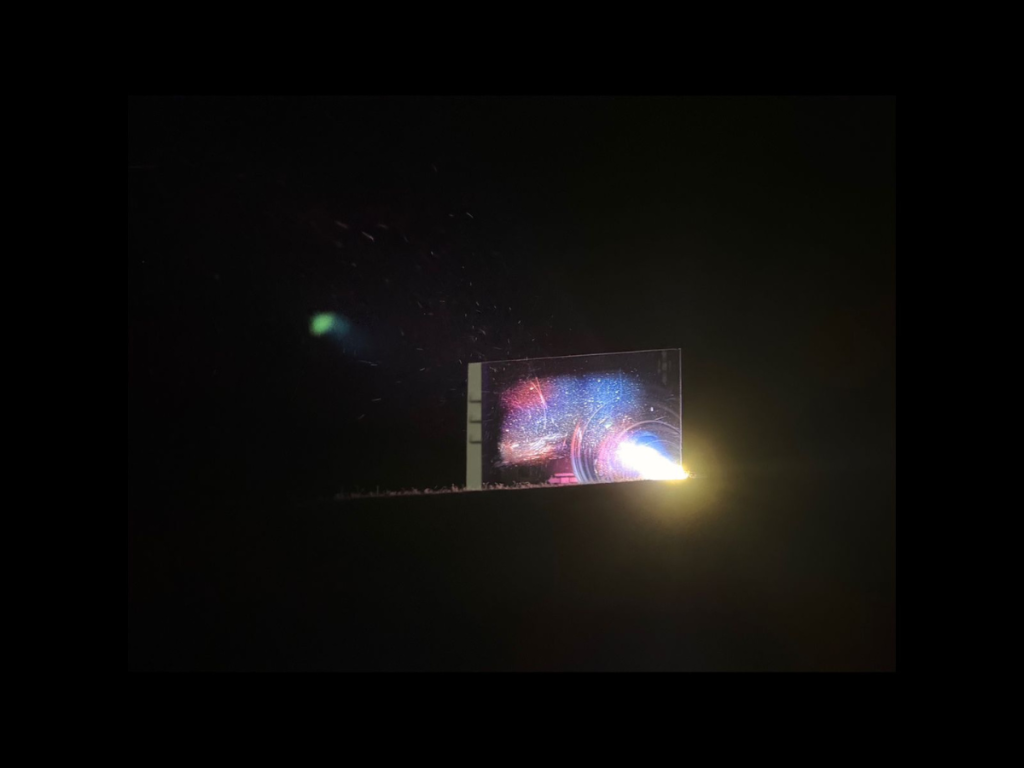
Instagram (@rishikapad1a)
And I will conclude this article with a thought:
Everytime you use a camera, to click a photo or a video, or go to a cinema to watch a movie – do take the part in thinking about from where this was, to where it is now. The sheer drive and mechanical and physical endeavours’ results now fit comfortably in the pockets of our jeans.
Regrettably, the digital streaming services are now more prevalent and thus, many people are actively avoid watching movies in the cinema – citing their availability in the streaming services.
But, as Stellan Skarsgård said once,
“In a cinema, where the lights go down and eventually you share the pulse with some other people… That’s magic. Cinema should be seen in cinemas.”
I wish you all a good day. Take care.