Europe’s wildfire season is exposing more than scorched forests, destroyed homes and evacuated communities. In several countries, flames are reaching landscapes that still contain unexploded bombs, shells and mines left behind by the First and Second World Wars. Some of these weapons have remained buried for decades, largely forgotten beneath forests, fields and wetlands. Now, as intense fires sweep through former battle zones, they are being uncovered, destabilised and, in some cases, detonated by the heat.
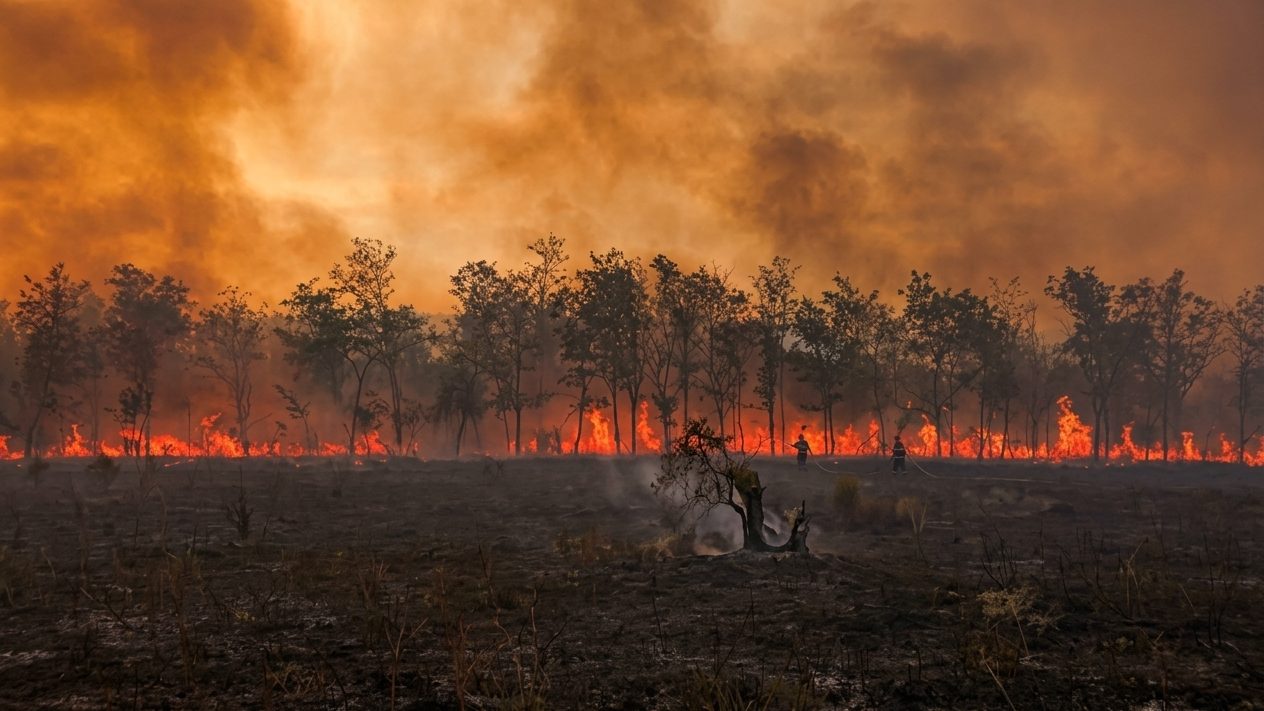
Reports of explosions have emerged from France, Belgium, Germany and the Netherlands, adding an unexpected danger for firefighters and emergency crews already working in extremely difficult conditions. In places that saw some of Europe’s fiercest fighting, a wildfire can suddenly become more than an environmental disaster. It can also reactivate dangers left behind by conflicts that ended generations ago.
When a Wildfire Becomes More Than a Fire
Firefighters usually enter burning landscapes concerned about shifting winds, collapsing trees, smoke and rapidly advancing flames. In parts of Europe, they now have another threat to consider: explosives hidden underground.
This has become particularly relevant in eastern Belgium, where wildfires have affected the High Fens, a large area of peatland and forest stretching toward the German border. The landscape is popular with hikers today, but during the Second World War it was connected to fierce fighting, including the Battle of the Bulge. Trenches, bomb craters and wartime debris still remain beneath the vegetation, even if the surface now appears peaceful.
Local historians and authorised metal detectorists have long found mortar shells, guns, helmets and other military remains in these areas. The difference now is that wildfire can expose these objects suddenly and unpredictably. Emergency services may know that munitions are likely to be present without knowing exactly where they are.
Climate Change Is Disturbing What Once Stayed Hidden
For decades, many unexploded weapons remained relatively stable because the landscapes around them changed slowly. Rainfall patterns, soil conditions and vegetation helped keep them buried or submerged. But Europe’s climate is becoming more volatile, and that volatility is altering the conditions that kept these wartime remnants out of sight.
Heavy rain can encourage vegetation growth, only for intense summer heat and drought to dry it out later. That creates ideal fuel for wildfires. Once fire moves through an area, vegetation disappears, soil can erode and buried objects may become visible. Extreme heat can also make old ammunition more unstable.
This is where the issue becomes larger than a story about forgotten bombs. Climate change is not creating these weapons, but it is changing the environments that once kept them relatively undisturbed. That means Europe is increasingly being forced to deal with historical dangers through the lens of a modern climate crisis.
In France, Residents Heard “The Sound of War”
One of the clearest examples came from southwestern France, where a major wildfire near Bordeaux exposed hundreds of pieces of suspected World War II ammunition around the village of Le Porge. Authorities recovered roughly 400 shells and pieces of ammunition, including mortar rounds and anti-tank munitions believed to have been used by German and French forces.
During the blaze, explosions were heard from within the affected area. Local officials later suggested that some of the old ammunition may have detonated in the heat. The description given by the village’s mayor was particularly striking: the blasts sounded like war.
The fire itself destroyed more than 180 homes, leaving residents to return not only to a burned landscape but also to the knowledge that dangerous military material had been buried nearby for decades. In one reported incident, an exploding piece of ammunition travelled through a house.
The symbolism is hard to ignore. A 21st-century climate disaster had activated weapons left behind by a 20th-century conflict.
Europe Has Never Completely Escaped Its Wartime Explosives
Unexploded ordnance is not unusual in Europe. Bombs and shells are regularly discovered during construction projects, farming, railway work and infrastructure development. Major cities sometimes evacuate thousands of residents while bomb-disposal teams remove explosives dropped during the Second World War.
Belgium remains one of the clearest examples of how present this history still is. Bomb-disposal teams respond to thousands of calls each year and remove large quantities of munitions dating from both world wars. Around Ypres, where some of the most brutal trench warfare of the First World War took place, farmers still uncover shells while ploughing their fields.
The phenomenon is so familiar that it has its own name: the “iron harvest.” More than a century after the fighting ended, the land continues to produce pieces of war.
What makes wildfire especially concerning is the loss of control. A bomb found during roadworks can usually be isolated and dealt with carefully. A shell hidden beneath a fast-moving forest fire cannot always be approached in the same way.
Drought Is Revealing the Same History
Fire is not the only weather event exposing old weapons. Drought is doing something similar across European rivers and lakes. As water levels fall, munitions that remained hidden for decades can suddenly appear. Naval mines have been exposed in the Danube, while unexploded bombs have emerged near bridges and riverbanks in other parts of Central Europe. The Rhine has also revealed wartime explosives during periods of unusually low water.
These discoveries show that the problem is not tied to one type of extreme weather. Wildfire, drought, erosion and falling water levels can all disturb places that were previously stable. This creates a growing challenge for emergency planners. Climate adaptation may increasingly have to account not just for floods, fires and heatwaves, but also for the hazards those events uncover.
The Social Cost Goes Beyond the Explosions
There is also a deeper social dimension to this story. Europe’s wars are often remembered through monuments, museums, cemeteries and schoolbooks. For younger generations, they can feel distant and historical. But in former battle regions, the physical evidence of war has never fully disappeared.
When a wildfire exposes a trench, a drought reveals a bomb or a shell is found beneath a village road, history becomes immediate again. A family can be evacuated because of a weapon buried before they were born. A firefighter can hear explosions from ammunition left behind more than 80 years ago. A farmer can uncover a shell in a field that has been cultivated peacefully for generations.
For local communities, this creates a strange overlap between memory and daily life. These are not just historical artefacts. They are objects that can still injure people, close roads and force evacuations. That is what makes this story socially powerful. Europe is not simply remembering its wars. In some places, it is still physically living with their consequences.
Firefighters Are Facing a More Complicated Risk
The presence of buried explosives adds another layer of uncertainty for wildfire crews. Former battlefields are rarely mapped perfectly, and wartime records do not always show where ammunition was abandoned, buried or moved.
A forest may look ordinary while containing old defensive positions, shell fragments and live explosives beneath the surface. When fire advances quickly, crews may have limited time to assess that risk.
This means local knowledge becomes increasingly important. Historians, military specialists, bomb-disposal teams and emergency services may all have a role to play in understanding which landscapes are particularly dangerous during fires. The challenge is that the risk is invisible until it is not.
Europe’s Landscapes Still Carry the Memory of War
One of the most striking aspects of this issue is the contrast between what people see above ground and what remains below it. Forests have regrown. Villages have been rebuilt. Wildlife has returned. Tourists walk through landscapes where armies once fought. Children play in towns that were once bombed.
That recovery is one of Europe’s great post-war stories. But nature has not erased everything. In many places, it has simply covered it. Now, extreme weather is stripping some of that cover away. It is a reminder that landscapes hold history differently from people. A battlefield can become a park or a forest, but the physical remnants of conflict may remain long after the memory of the fighting begins to fade.
A Climate Story With a Historical Twist
Europe’s wildfire crisis is usually discussed in terms of extreme heat, drought, vegetation, evacuations and climate change. Unexploded ammunition adds a much less familiar dimension. The key question is no longer simply how climate change will affect forests, cities or agriculture. It is also what happens when a changing climate begins disturbing dangerous materials inherited from the past.
Old weapons are one example. Other countries may face similar issues involving abandoned military sites, polluted land, buried infrastructure or hazardous industrial waste. In this sense, Europe’s wartime bombs are part of a much broader challenge. Climate change can reveal risks that were never designed with extreme weather in mind.
The Past Is Not Staying Buried
For decades, many of Europe’s unexploded weapons remained out of sight. Some were buried beneath soil, others hidden in forests or submerged in rivers. This summer has shown how quickly those conditions can change. A wildfire can remove decades of vegetation in a matter of hours. A drought can expose riverbeds that have not been visible for generations. And suddenly, an object left behind in the 1940s is sitting in the open again.
For emergency services, that is a safety problem. For residents, it can mean another evacuation. For historians, it is another reminder of how deeply the wars reshaped Europe. And for everyone watching Europe’s climate become hotter and more unpredictable, it carries a wider message: environmental change does not only shape the future. Sometimes, it brings the past back with it.