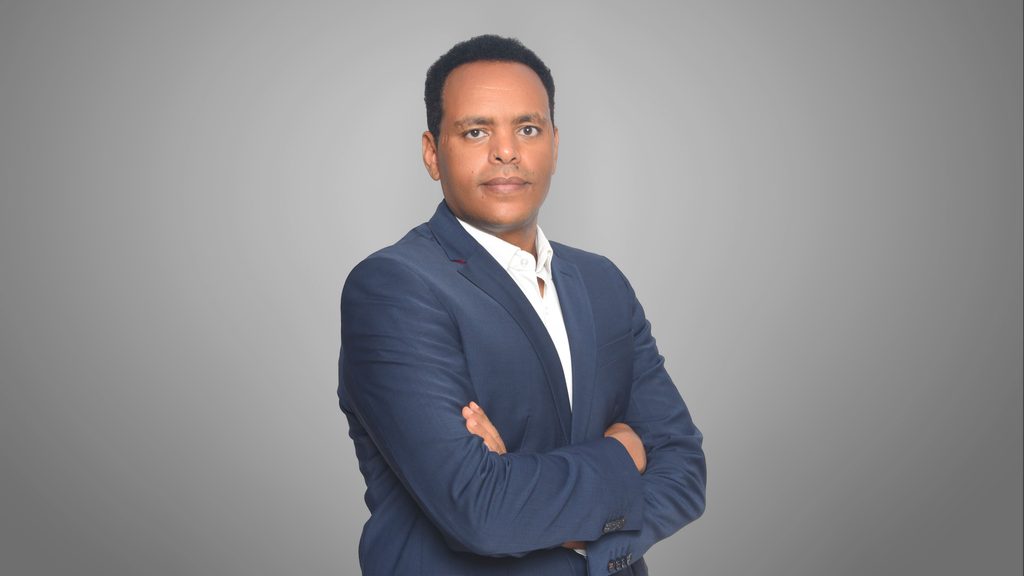
For Dr. Kibrom T. Sibhatu, agricultural development is not simply about producing more—it is about understanding what genuinely improves people’s lives. His journey from Eritrea through Japan and Germany to Kenya has shaped a research perspective attentive to farmers’ incomes, nutrition and resilience. Now based at icipe in Nairobi, he connects research, teaching and mentoring with practical development challenges. In this conversation with The Social Digest, he explores why higher yields do not automatically mean better livelihoods, how market access influences diets, and what genuinely inclusive agricultural technology requires. He also makes the case for African researchers to help shape research priorities from the outset, bringing local leadership into international collaboration. His reflections invite a broader view of progress—one grounded in evidence and responsive to the people research seeks to serve.
The Social Digest: You recently reflected that Germany taught you efficiency, punctuality and respect for time, while Kenya has taught you to value presence, relationships and making time for people. Has living between these two cultures changed the way you define a “good professional” or a “successful researcher”?
Yes, it has. Germany taught me a discipline that I still rely on every day, including respecting time, preparing carefully, meeting commitments, and being precise in my work. I continue to see these as important parts of being a good professional.
Living and working in Kenya has added another dimension to that. I have become more conscious of the importance of presence and relationships. Research is ultimately about people, whether they are farmers, students, colleagues, or research partners. Building trust often requires giving people time and being present beyond the formal purpose of a meeting or field visit.
I now think a good professional needs both. Rigour, reliability and efficiency are important, but they are not enough on their own. Research also depends on trust, collaboration and the quality of the relationships through which knowledge is generated and used.
So, my idea of professional success has become less about simply producing good work and more about producing rigorous work while also being someone people can work with, learn from and trust. I am still learning how to balance those two sides.
The Social Digest: Your journey has taken you from Eritrea to Japan, Germany and now Kenya. When you look back, which belief about poverty, agriculture or development did you once hold strongly that experience eventually forced you to reconsider?
Earlier in my career, I tended to think about agricultural development mainly through productivity that if farmers could produce more from the same land and resources, their livelihoods would improve. My experience in the field has made me more careful about that assumption.
A farmer can increase yields and still face low returns if input costs are high, markets are unreliable, prices are poor, or production risks are substantial. Similarly, producing more food does not automatically mean a more diverse or nutritious diet at home. The benefits of higher productivity depend on what happens between production and the outcomes that ultimately matter for the household.
This changed the way I approach development research. I am still very interested in productivity, technology, and innovation, but I now ask a wider question. What happens after adoption? Does the innovation actually improve incomes, food security, nutrition, or resilience, and for whom? The distinction between improving production and improving people’s lives has become increasingly important in how I think about agricultural development.
The Social Digest: After years in the German university system, what drew you to move to Nairobi and work at icipe? Has being based closer to many of the communities and agricultural systems you study changed the questions you ask—or the way you interpret the answers?
Two things drew me to icipe. First, I did not see the move as leaving academia. I still wanted to do research, teach, and mentor students, which have been important parts of my work in Germany. What icipe offered was an opportunity to continue those activities while working in an organisation with a stronger focus on applying science to development challenges.
Second, I was attracted by the opportunity to work closer to the agricultural systems and communities that I study. In Germany, much of my work involved studying smallholder systems from a university setting, with fieldwork providing important but periodic contact with farmers and other stakeholders. Being based in Nairobi puts me much closer to those systems and to organisations working directly on agricultural development across Africa.
That proximity has influenced both the questions I ask and how I interpret the answers. I used to focus more on whether an intervention works on average. I now pay much more attention to who benefits, under what conditions, and what happens when an intervention moves beyond the project setting.
For me, the move to icipe has therefore been less a move away from academia than an opportunity to connect research, teaching and mentoring more directly with development practice.
The Social Digest: You have spent years collecting data from farmers across Africa and Asia. What is something about farmers’ decisions that looks irrational when viewed from an office or an economic model, but becomes completely rational once you sit with people and understand their circumstances?
A common example is the farmer who declines a higher-yielding variety or a recommended input package even when the expected return is positive. From an economic model, that decision can look inefficient. Once you understand the household’s circumstances, it can be quite rational. A family with little savings or no insurance may value a lower but more predictable return over a higher but uncertain one.
Crop diversification is another interesting example. From an economic perspective, growing several crops on small plots can sometimes look inefficient if the focus is simply on maximising returns. But farmers may be using diversification to spread risks across weather, pests and prices, while also managing labour and cash flow throughout the year.
At the same time, I have become more careful about assuming that crop diversification automatically means greater nutritional diversity. Different crops can serve different ecological or economic functions without necessarily adding much nutritional diversity to the household diet. Wheat, maize and rice, for example, are very different crops agronomically, but they have overlapping nutritional roles as staple sources of energy. So, a farm can become more diverse without the household diet becoming equally diverse.
I have also seen farmers maintain local varieties with lower yields because they store well, taste better, suit local food preferences, or can be replanted from saved seed. These decisions remind me that farmers are not simply maximising yield or income. They are balancing production, risk, labour, food preferences, nutrition, and resilience, often with very limited room for error.
What looks like an inefficient choice from one perspective can therefore make considerable sense when you consider the different functions that a crop or technology serves in a household’s livelihood.
The Social Digest: One of your influential findings challenged the idea that simply encouraging small farmers to grow a greater variety of crops will necessarily give their families better diets; access to markets can sometimes matter more. What does that teach us about the danger of attractive but overly simple solutions to hunger and malnutrition?
That work, which I did with Prof. Dr. Matin Qaim and colleagues using household data from Indonesia, Kenya, Ethiopia, and Malawi, found that growing a wider variety of crops is associated with more diverse diets, but the effect is modest. Access to markets often matters more. Farmers who can sell what they produce and use the income to buy foods they do not grow themselves tend to have more diverse diets than households that try to produce most of their food on the farm.
For me, the lesson is not that crop diversification is unimportant, as I mentioned earlier. It is that a solution can be sensible without being the most important constraint. Encouraging farmers to grow more crops sounds like an obvious way to improve diets, but it may have limited effects if households still have poor access to markets, low incomes, high food prices, or limited time and resources.
This is where attractive, simple solutions can become problematic. They are easy to communicate and easy to turn into programmes, but they can distract attention from the constraint that matters most in a particular setting. Hunger and malnutrition are rarely caused by one factor alone. Income, markets, food prices, infrastructure, women’s time, production choices, and nutrition knowledge can all matter.
For me, the important lesson is to start with the evidence rather than with the intervention. Before asking how to scale a solution, we should ask what problem is actually constraining better nutrition, whether the proposed intervention addresses that constraint, and how large its likely effect is.
The Social Digest: Agriculture is now being transformed by apps, digital advisory services and AI. You have warned that technology can also reproduce inequalities—particularly for women and people without smartphones, connectivity or digital literacy. What would genuinely inclusive agricultural technology look like to you?
Agricultural technology can create new opportunities, but it can also reproduce existing inequalities if we assume that everyone can access and use it in the same way. In our studies and projects, we have seen that digital advisory services can take very different forms, from self-service tools to services supported by extension agents and other local intermediaries.
For me, genuinely inclusive agricultural technology starts by asking who might be left out. Women may have less access to smartphones, airtime, digital skills, or the time needed to learn a new tool. Many farmers still use basic phones, while others may have limited or no connectivity.
Inclusive design therefore means providing different ways to access the same information, including voice messages, radio, SMS, and trained local agents, using languages that people understand. It also means involving farmers in the design so that the technology responds to their actual needs rather than assumptions made by developers.
Therefore, we need to measure who is actually being reached and whether they are benefiting. A technology that reaches only those who already have good connectivity and digital skills may be innovative, but it is not necessarily inclusive. For me, the real test is whether technology expands access to useful opportunities rather than creating another layer of exclusion.
The Social Digest: Much of your research sits at an uncomfortable intersection: farmers need income, societies need food, but agricultural expansion can damage forests and biodiversity. After studying land-use change and oil palm systems for years, how should we think about the trade-off between improving livelihoods today and protecting ecosystems for tomorrow?
My research on oil palm in Indonesia taught me that both sides of this trade-off are real. Smallholder oil palm raised household incomes substantially, paid school fees, and financed better housing. At the same time, expansion contributed to forest loss and declining biodiversity. Neither fact cancels the other. I think we should reject the framing that people must choose between livelihoods today and ecosystems tomorrow and instead ask how to get more of both. Three ideas guide me. First, raise productivity on land already under cultivation so that growing demand does not require new clearing. Second, plan at the landscape level, so that high-value conservation areas are identified and protected while production concentrates where it does least harm. Third, make sure the benefits of conservation reach the people who bear its costs. Farmers protect what pays and what they own. Good policy aligns those incentives rather than expecting sacrifice.
The Social Digest: You have publicly argued that Africa’s agricultural challenges cannot be explained simply by a lack of research, and have pointed to institutions, implementation and political accountability as important parts of the picture. What experiences led you to that view, and how should responsibility be shared among researchers, governments, markets, donors and farmers themselves?
My view comes from watching excellent research sit on shelves. In many of the countries where I have worked, the science on improved varieties, soil management, or pest control exists and is often decades old. Yet adoption remains low and yields remain far below their potential. The missing pieces are usually implementation and coordination rather than knowledge. Extension systems are thinly staffed, input markets are unreliable, and programmes are evaluated on activities completed rather than on outcomes for farmers. Seeing that pattern repeatedly convinced me that research alone cannot carry the load. Responsibility has to be shared. Researchers should produce evidence that answers questions decision makers actually face and should communicate it in usable form. Governments provide the public goods that markets will not, such as rural roads, extension, and regulation, and they track results transparently. Markets and the private sector deliver inputs and buy outputs reliably. Donors fund longer horizons and reward learning. Farmers, as the experts on their own land, adapt and improve what they receive. When each part does its share, research becomes valuable.
The Social Digest: You have recently been reflecting on who leads research for development and whether externally funded projects create enough space for local leadership. In practical terms, what would have to change for African researchers and institutions to become not merely partners in research projects, but the people setting the questions and priorities?
I do not think the answer is to reduce international collaboration or external funding. Both are important for research for development. The more important question is how these partnerships are structured and who has a meaningful role in setting the research agenda.
For me, local leadership starts before a proposal is written. African researchers and institutions should have a stronger voice in identifying the problems and priorities that deserve research, rather than only responding to priorities that have already been defined in funding calls. That requires funders and research organisations to create more opportunities for researchers on the continent to shape those priorities from the beginning.
This does not mean that African institutions should work without international partners. International collaboration brings valuable expertise, networks, and resources. The change I would like to see is greater space for African researchers and institutions to influence what questions are asked, while working with international partners to address them. Ultimately, becoming a research leader means having a role not only in answering research questions, but also in helping decide which questions should be asked in the first place.
This interview was conducted by Emilia Mayer, The Social Digest, on 30/09/2026. If you have any interview recommendations or have a story that you want to share with our readers, get in touch with our editor, Vedant Bhrambhatt, at editor@thesocialdigest.com