
More than four thousand years before novels filled bookshelves and writers became public figures, a powerful woman in ancient Mesopotamia was doing something remarkably modern: attaching her identity to her words. Enheduanna was a princess, high priestess, poet and political figure who lived during the rise of the Akkadian Empire around 2300 BCE. Today, she is widely regarded as the earliest known author whose name and historical existence can both be identified, making her story an extraordinary chapter in the history of literature and women’s influence in the ancient world.
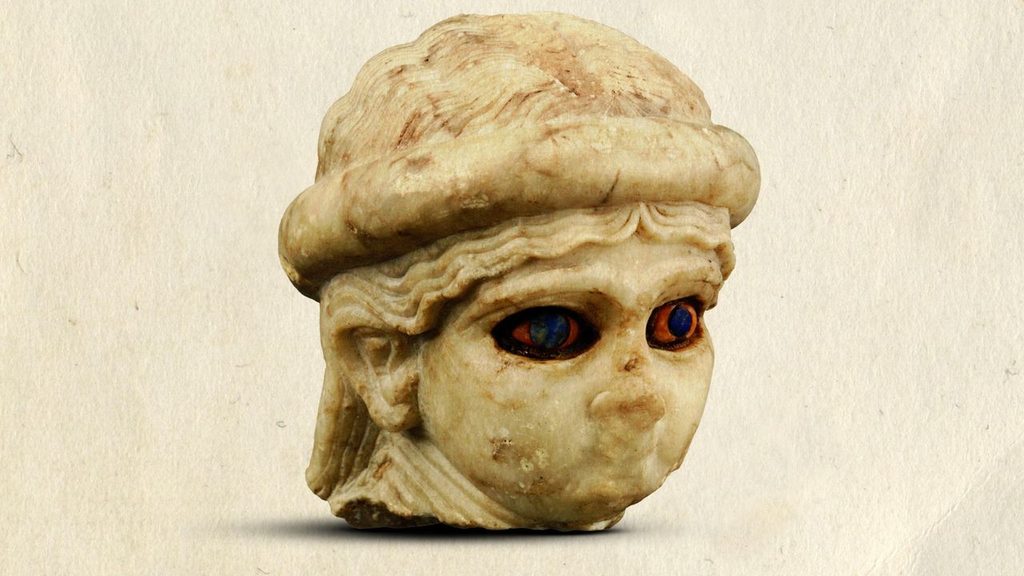
For the article image, the famous Disc of Enheduanna is the strongest choice. It depicts Enheduanna taking part in a religious ceremony and provides one of the clearest archaeological connections to her life. For publication, The Social Digest should obtain an appropriately licensed image or confirm reuse rights with the Penn Museum before publishing it.
Enheduanna was the daughter of Sargon of Akkad, the ruler who created an empire stretching across much of Mesopotamia. Rather than remaining simply a royal princess, she was appointed high priestess of Nanna, the moon god worshipped at the important city of Ur. The position carried enormous religious and economic authority. Temples controlled land, workers, workshops and valuable resources, while their priesthoods influenced both spiritual life and politics. By placing his daughter in such a powerful religious office, Sargon also strengthened the connection between his ruling family and the cities he had conquered.
Yet Enheduanna’s most enduring influence did not come from royal blood or temple authority. It came from writing. She composed religious poetry in Sumerian, including works devoted to the formidable goddess Inanna, associated with love, warfare and political power. Her writings brought together personal emotion, religious devotion and political struggle in ways that feel surprisingly intimate even after thousands of years. Instead of disappearing anonymously into history, Enheduanna identified herself within her compositions, turning the writer into a visible presence behind the words.
Her life was also marked by political upheaval. During a rebellion against the Akkadian dynasty, Enheduanna appears to have been forced from her position in Ur. Her poetry transformed this crisis into a dramatic appeal to divine power, presenting exile, fear and eventual restoration through the relationship between priestess and goddess. Writing was therefore more than an artistic pursuit for her. In a world where religion and government were deeply connected, poetry could help defend authority, influence public belief and reinforce the legitimacy of a ruling dynasty.
Her words survived far longer than the empire that surrounded her. Centuries after Enheduanna’s lifetime, scribes were still copying compositions associated with her in Mesopotamian schools. Archaeologists have discovered later clay tablets containing these works, suggesting that her literary reputation endured for generations. There remains scholarly debate over how closely these surviving copies reproduce Enheduanna’s original compositions, since the manuscripts available today were produced long after her lifetime. Her historical existence, however, is firmly supported by archaeological evidence.
Among the most striking discoveries is the Disc of Enheduanna, a carved object from ancient Ur dating to around 2300 BCE. The scene presents her prominently during a religious ceremony, while an inscription identifies her through her priestly office and connection to Sargon. The object gives a face, title and historical setting to someone whose voice otherwise reaches us through fragile clay tablets copied across centuries.
Enheduanna’s importance goes beyond the question of who wrote the first poem. Her story shows that authorship, personal expression and female intellectual authority existed near the very beginning of recorded literature. Thousands of years later, the survival of her name may be her greatest achievement: at the dawn of written history, one of literature’s earliest recognizable voices belonged to a woman.